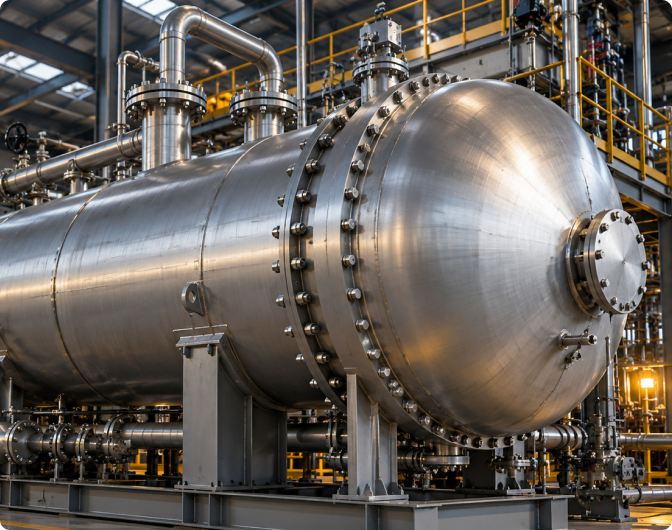
Sulfur Recovery Units

Petro Solis designs and supplies Sulfur Recovery Units (SRU) for the conversion of hydrogen sulfide (H₂S) contained in acid gas streams into elemental sulfur, helping clients meet environmental regulations while maximizing sulfur recovery and operational efficiency.

Sulfur Recovery Units are widely used in natural gas processing plants, refineries, petrochemical complexes, and other facilities where acid gas streams are generated. By recovering sulfur from H₂S-rich streams, SRUs reduce SO₂ emissions, improve environmental performance, and convert sulfur compounds into valuable elemental sulfur products.

Petro Solis provides complete engineering solutions for Claus-based sulfur recovery systems, including process design, equipment design, fabrication, modularization, installation support, commissioning, and operational optimization.

Why Petrosolis

Proven PSA & TSA configurations

High product purity & recovery

Optimized adsorbent selection & bed sizing

Optimized adsorbent selection & bed sizing

EP, EPC & turnkey execution

Optimized lifecycle costs

Modular skid-mounted packages

Integrated engineering & manufacturing
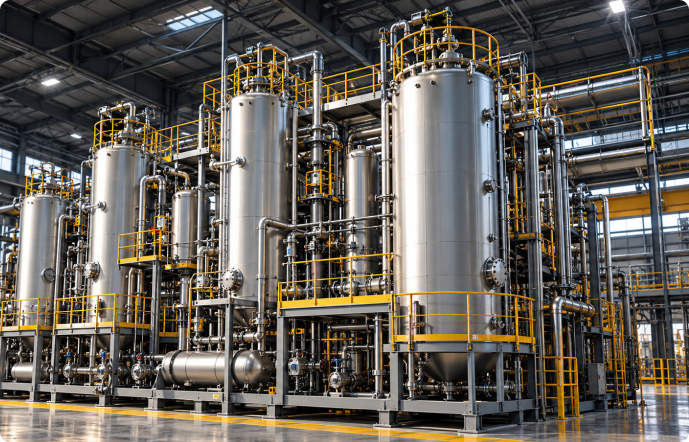
Applications

Sulfur Recovery Units are commonly used in:
  • Natural Gas Processing Plants
  • Refineries
  • Petrochemical Facilities
  • Gas Sweetening Plants
  • LNG Facilities
  • Production Units
  • Industrial Gas Treatment Facilities

Claus Sulfur Recovery Process

The Claus process is the most widely used technology for recovering elemental sulfur from hydrogen sulfide-containing gas streams.

In the thermal stage, a portion of the H₂S is combusted to form sulfur dioxide (SO₂), which subsequently reacts with the remaining H₂S to produce elemental sulfur. Additional sulfur recovery takes place in catalytic stages, significantly increasing overall sulfur recovery efficiency.

Depending on process configuration and the number of catalytic stages, conventional Claus units can typically achieve sulfur recovery efficiencies exceeding 95–98%. Higher overall recovery levels may be achieved through integration with tail gas treatment systems.

The resulting sulfur is condensed and collected, while the remaining tail gas can be routed to incineration or further treatment systems depending on project requirements.
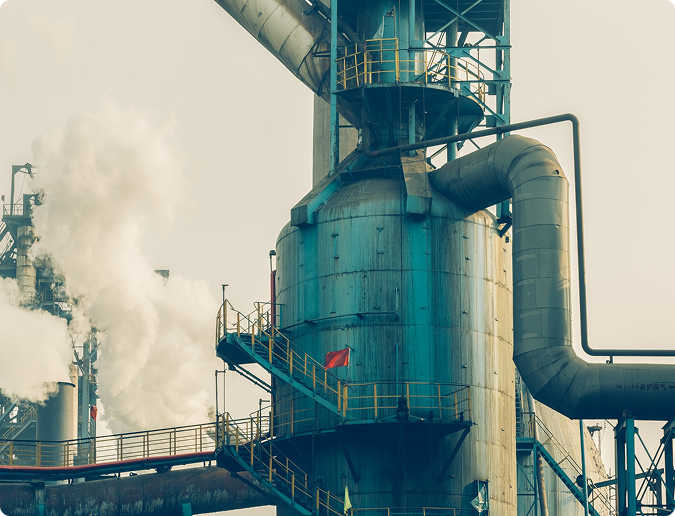
Typical Process Configuration

A typical Claus Sulfur Recovery Unit may include:
  • Thermal Reactor (Reaction Furnace)
  • Waste Heat Boiler
  • Sulfur Condenser
  • Catalytic Reactor
  • Reheater
  • Additional Catalytic Stages
  • Additional Sulfur Condensers
  • Incinerator
  • Sulfur Collection and Handling Systems
The final process configuration is selected based on sulfur recovery requirements, feed gas composition, environmental regulations, and project economics.

Scope of Supply

Petro Solis can provide complete SRU systems on a supply-only, EP, or turnkey basis. Depending on project requirements, the scope may include:
  • Thermal Reactor (Reaction Furnace)
  • Burners and Combustion Systems
  • Waste Heat Boilers (WHB)
  • Sulfur Condensers
  • Catalytic Reactors
  • Reheaters
  • Incinerators
  • Sulfur Pit Systems
  • Instrumentation and Control Systems
  • Burner Management Systems (BMS)
  • Unit Control Panels (UCP)
  • Structural Steel, Ladders, and Platforms
  • Piping, Valves, and Accessories
  • Installation and Commissioning Support

Other PROJECT EXPERIENCE

Lorem ipsum dolor sit amet

Lorem ipsum dolor sit amet, consectetur adipiscing elit, sed do eiusmod tempor incididunt ut labore et dolore

Lorem ipsum dolor sit amet

Lorem ipsum dolor sit amet

A modular package designed to prepare natural gas for downstream processing. Our team coordinated process engineering, equipment fabrication, skid assembly and site commissioning within one integrated delivery scope.

Thermal Reactor Expertise

Thermal Reactor Design

The thermal reactor is the heart of the sulfur recovery process, where the initial thermal conversion of H₂S takes place at temperatures typically exceeding 1,000°C. In addition to sulfur formation, the thermal stage promotes destruction of contaminants such as ammonia and hydrocarbons while establishing the required process conditions for downstream catalytic conversion.

Petro Solis provides complete thermal reactor engineering including:

  • Process and Thermal Design
  • Burner Selection and Sizing
  • Residence Time Evaluation
  • Temperature Profile Analysis
  • Mechanical Design
  • Thermal Expansion Assessment
  • Stress Evaluation
  • Equipment Fabrication Support

Burner Systems

Proper burner selection is critical for achieving stable combustion, optimum sulfur recovery, and long-term equipment reliability.

Petro Solis provides customized burner solutions featuring:

  • High Turndown Ratios
  • Reliable Flame Stability
  • Sour Gas Service Capability
  • Integrated Flame Detection Systems
  • Burner Management Systems (BMS)
  • Safe Startup and Shutdown Sequences

Refractory Design & Thermal Analysis

Refractory design is one of the most critical aspects of thermal reactor engineering.

Petro Solis performs:

  • Refractory Material Selection
  • Refractory Thickness Calculations
Proper refractory design protects equipment integrity, improves reliability, reduces maintenance requirements, and extends equipment service life.


Waste Heat Recovery Systems

High-temperature process gases leaving the thermal reactor contain significant recoverable energy.

Petro Solis designs Waste Heat Boilers (WHB) to:

  • Recover Thermal Energy
  • Generate Steam for Plant Use
  • Cool Process Gas for Downstream Sulfur Recovery Stages
  • Improve Overall Plant Energy Efficiency
Special attention is given to circulation design, thermal stress management, tube protection, and long-term reliability.


Sulfur Condensers

Sulfur condensers are designed to efficiently recover sulfur generated in the thermal and catalytic stages of the Claus process.

Petro Solis performs:

  • Thermal Rating Calculations
  • Condensation Modeling
  • Heat Transfer Analysis
  • Mechanical Design
  • Sulfur Drainage Optimization
  • Reliability and Maintainability Studies
The objective is to maximize sulfur recovery while maintaining optimum process conditions for downstream equipment.


Reheaters

Reheaters are used to increase process gas temperature before catalytic reactors and prevent sulfur condensation within catalyst beds.

Petro Solis provides:

  • Direct-Fired Reheaters
  • Indirect Steam Reheaters
  • Process Optimization Studies
  • Temperature Control Strategies
The selected reheating system is optimized according to process requirements, energy efficiency targets, and plant operating philosophy.

Incineration Systems

Incinerators are designed to safely oxidize residual sulfur compounds remaining in the tail gas stream before atmospheric discharge.

Petro Solis provides complete incineration solutions including:

  • Thermal Design
  • Burner Systems
  • Combustion Air Systems
  • Emission Control Integration
  • Waste Heat Recovery Integration
  • Environmental Compliance Studies

Engineering Capabilities

Petro Solis provides comprehensive engineering services for sulfur recovery projects, including:
  • Process Design and Optimization
  • Claus Process Evaluation
  • Process Simulation and Modeling
  • Heat & Material Balance Development
  • Thermal Reactor Design
  • Burner Selection and Combustion Studies
  • Refractory Design and Heat Flow Calculations
  • Waste Heat Boiler Design
  • Sulfur Condenser Design
  • Reheater Design
  • Incinerator Design
  • Mechanical Design
  • Structural and Skid Design
  • Piping Design and Stress Analysis
  • Instrumentation and Control System Design
  • Burner Management System (BMS) Development
  • Unit Control Panel (UCP) Logic Development
  • Cause & Effect Diagram Preparation
  • 3D Modeling and Shop Drawing Preparation
  • Debottlenecking and Capacity Enhancement Studies
  • Revamp and Retrofit Engineering

Process Safety & Control Systems

Safe operation of sulfur recovery units requires reliable combustion control and process monitoring systems.

Petro Solis develops:

  • Burner Management Systems (BMS)
  • Unit Control Panel (UCP) Logic
  • Cause & Effect Diagrams
  • Emergency Shutdown (ESD) Philosophy
  • Combustion Control Systems
  • Flame Detection Systems
  • Process Monitoring and Alarm Systems
These systems are designed to ensure safe startup, shutdown, normal operation, and emergency response.

Revamp & Debottlenecking Services

Petro Solis supports existing sulfur recovery facilities through:

  • Capacity Increase Studies
  • Sulfur Recovery Improvement Projects
  • Thermal Reactor Retrofits
  • Refractory Upgrades
  • Burner Replacement and Optimization
  • Waste Heat Boiler Modifications
  • Sulfur Condenser Upgrades
  • Incinerator Improvements
  • Emission Reduction Projects
  • Reliability Enhancement Programs

Design Standards

Petro Solis Sulfur Recovery Units are designed in accordance with applicable international codes, standards, and project-specific client requirements. Applicable standards may include API, ASME, ASTM, NACE, and other project-specific specifications as required.

Not Sure Wich Solution fits your process?

Share your feed condition and project requierment with our team

Please enter the phrase you would like to use.