TEG Gas Dehydration Packages

Petro Solis designs and supplies Triethylene Glycol (TEG) Gas Dehydration Packages for natural gas processing, transmission, storage, and downstream applications.

Gas dehydration is a critical process used to remove water vapor from natural gas to prevent hydrate formation, condensation of free water, corrosion, and operational issues in processing and transportation facilities. Dehydration also ensures compliance with pipeline and downstream process water content specifications.
TEG is the most widely used liquid desiccant for natural gas dehydration due to its high water absorption capacity, thermal stability, low operating cost, and minimal glycol losses. Petro Solis provides complete TEG dehydration systems designed to achieve reliable operation, high glycol recovery, and optimized energy consumption.
For applications requiring ultra-low water content, Petro Solis also provides adsorption-based dehydration systems utilizing molecular sieve technology.

Why Petrosolis

Proven PSA & TSA configurations

High product purity & recovery

Optimized adsorbent selection & bed sizing

Optimized adsorbent selection & bed sizing

EP, EPC & turnkey execution

Optimized lifecycle costs

Modular skid-mounted packages

Integrated engineering & manufacturing
Applications

Petro Solis adsorption packages can be designed for a wide range of applications, including:


  • Hydrogen Purification
  • Carbon Dioxide Removal
  • Hydrogen Sulfide Removal
  • Mercaptan Removal
  • Oxygen Removal
  • Nitrogen Generation

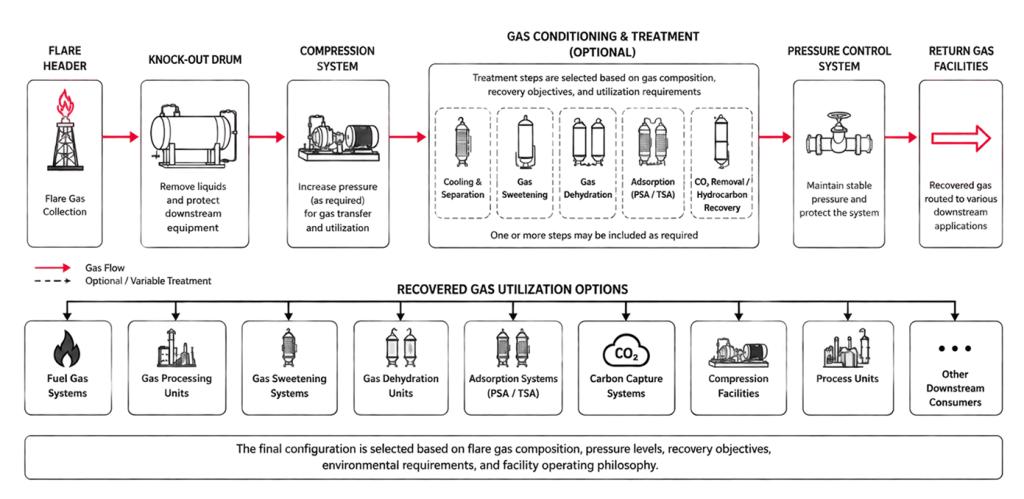
FLARE GAS RECOVERY SYSTEM

Recover Valuable Hydrocarbons | Reduce Flaring | Improve Efficiency | Lower Emissions

Process Description

Wet natural gas enters the contactor where water vapor is absorbed by lean TEG flowing counter-currently to the gas stream. The dehydrated gas exits the top of the contactor while the water-rich glycol is routed to the regeneration section.
The regeneration system removes absorbed water from the rich glycol through controlled heating and stripping, producing regenerated lean TEG that is recycled back to the contactor. The process continuously maintains the required gas water content while minimizing glycol losses and energy consumption.
Conventional TEG dehydration systems are typically capable of achieving pipeline-quality gas specifications, with outlet water contents commonly in the range of approximately 3–7 lb H₂O/MMSCF, depending on operating conditions and project requirements. For applications requiring lower water contents, enhanced regeneration techniques or adsorption-based dehydration systems may be considered.

Scope of Supply

Petro Solis can provide complete TEG Gas Dehydration Packages on a supply-only, EP, or turnkey basis. Depending on project requirements, the package may include:
  • TEG Contactor Tower
  • Glycol Regeneration Package
  • Reboiler
  • Still Column
  • Reflux Condenser
  • Flash Tank / Surge Drum
  • Lean/Rich Glycol Heat Exchanger
  • Glycol Pumps
  • Filters and Filtration Systems
  • Air Coolers
  • Lean TEG Cooling Systems
  • Instrumentation and Control Systems
  • Burner Management Systems (BMS) for Fired Reboilers
  • Structural Steel, Ladders, and Platforms
  • Piping, Valves, and Accessories
  • Installation and Commissioning Support

Other PROJECT EXPERIENCE

Lorem ipsum dolor sit amet

Lorem ipsum dolor sit amet, consectetur adipiscing elit, sed do eiusmod tempor incididunt ut labore et dolore

Lorem ipsum dolor sit amet

Lorem ipsum dolor sit amet

A modular package designed to prepare natural gas for downstream processing. Our team coordinated process engineering, equipment fabrication, skid assembly and site commissioning within one integrated delivery scope.

Technical information


Technology PSA or TSA
Design basis Feed composition and operating conditions
Product requirements Project-specific purity and recovery
Adsorbent Application-dependent selection
Regeneration Pressure cycling or thermal cycling
Configuration Modular skid-mounted
Delivery scope EP, EPC or turnkey

Final operating ranges and specifications are established during project engineering.

Engineering Capabilities

Petro Solis provides comprehensive engineering services for gas dehydration projects, including:

  • Process Design and Optimization
  • Process Simulation and Modeling
  • Heat & Material Balance Development
  • Hydraulic and Utility System Studies
  • Equipment Sizing and Specification
  • TEG Circulation Rate Optimization
  • Regeneration System Design
  • Mechanical Design
  • Structural and Skid Design
  • Piping Design and Stress Analysis
  • Instrumentation and Control System Design
  • Cause & Effect Diagram Development
  • Burner Management System (BMS) Development
  • Unit Control Panel (UCP) Logic Development
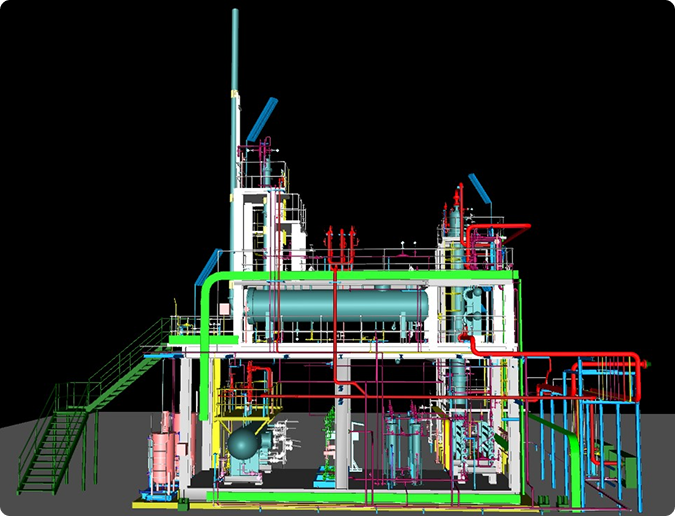
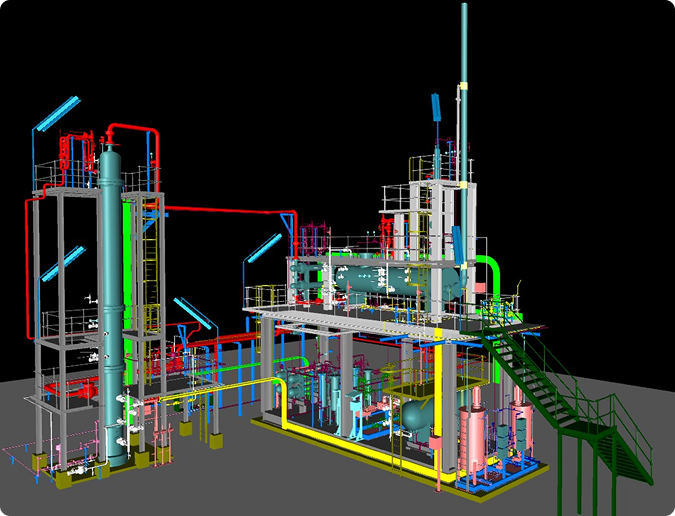
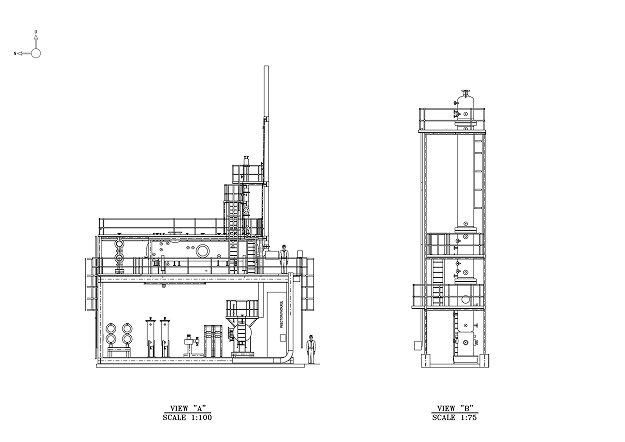
  • 3D Modeling and Shop Drawing Preparation
  • Debottlenecking and Capacity Enhancement Studies
  • Revamp and Retrofit Engineering

Key Features

Modular Skid-Mounted Design

Compact and fully integrated skid-mounted packages reduce site installation work and simplify transportation and commissioning activities.

Energy-Efficient Regeneration

Optimized regeneration systems reduce fuel consumption while maintaining the required glycol purity and dehydration performance.

Sour Gas Applications

Packages can be designed for sour gas service with appropriate material selection and process considerations to address acid gas solubility and corrosion concerns.

Automation & Remote Operation

The system can be fully automated for unattended operation and remote monitoring, making it suitable for both onshore and offshore installations.

Package Components

Typical package components may include:

  • Contactor Tower
  • Regeneration Section
  • Reboiler
  • Still Column
  • Reflux Condenser
  • Flash Tank
  • Surge Drum
  • Glycol Pumps
  • Lean/Rich Exchangers
  • Air Coolers
  • Filtration Systems
  • Instrumentation and Control Systems
  • Burner Management System (BMS)
  • Structural Steel, Ladders, and Platforms


Design Standards

Petro Solis TEG Gas Dehydration Packages are designed in accordance with applicable international codes, standards, and project-specific client requirements. Applicable standards may include ASME, NACE, ASTM, TEMA, and other project-specific specifications as required.

Not Sure Wich Solution fits your process?

Share your feed condition and project requierment with our team

Please enter the phrase you would like to use.